Over the past year, I’ve plunged headfirst into the gritty reality of what it truly takes to last in the music industry. Forget the social media hustle, the rented Lamborghinis, and the endless parade of overnight success stories. I’m talking about the kind of survival that endures, the slow-burn, long-haul kind that keeps you in the game for years to come.
While most people in this industry chase the next viral hit, hoping the TikTok gods will crown them overnight, I’ve been drawn to something more profound: how to keep playing, year after year. I’ve been quietly picturing what true staying power could look like in my own journey.
I’ve come to see there’s no shame in staying exactly where you are, and there is zero pressure to move up the ladder before you’re truly ready. If I’m being honest, there’s a low-grade anxiety that every musician carries, a quiet fear that your creative career could vanish faster than you ever expected.
But here is the core principle: If you understand the business of music, you give yourself a fighting chance to stick around. And if you stick around long enough, that’s when the magic finally happens.
On my journey, I’ve encountered all kinds of hesitations and fears among musicians just starting, who want to be in the game, want to be considered “legitimate” by the industry, but feel paralyzed by their limited budget, staring at their heroes’ gear lists like outsiders peering through a locked door, searching for a key.
The more I delved into this matter, the more I realized that the world might be missing out on incredible, life-changing talent due to one toxic, mistaken belief: The idea that if you don’t own a prestigious, branded instrument, you have no place of honor in this industry.
I’ve met famous guitar heroes who chose to play less-branded guitars for their entire careers. They understood something most beginners don’t: The logo doesn’t write the song. In this article, I want to focus on the strategic purchase of accessible musical instruments. This isn’t about “settling” for less; it’s about a precursor to entering the industry without underestimating your own value.
I want you to pour all your energy into creating and sharpening your craft, not wasting a single moment on the toxic spiral of self-doubt and gear envy that helps no one.
Let’s look at the world of guitars, where the “center of gravity” for ego is strongest. Musicians often judge themselves and others by the logo emblazoned on the headstock rather than the quality of the playing.
We’ve all seen it: the guy who walks into a jam session with a $5,000 Les Paul but can’t hold a basic rhythm, versus the kid with a beat-up Squier who absolutely burns the house down.
Of the many leading brands in the world, Fender and Gibson are the most admired. They are the gold standard. They are the names carved into the history of rock, blues, and jazz. But due to their exorbitant prices, they are often out of reach for the average person. To address this, these two giants created subsidiaries: Squier and Epiphone. They specialize in producing affordable versions, or “faithful imitations,” of the original models.
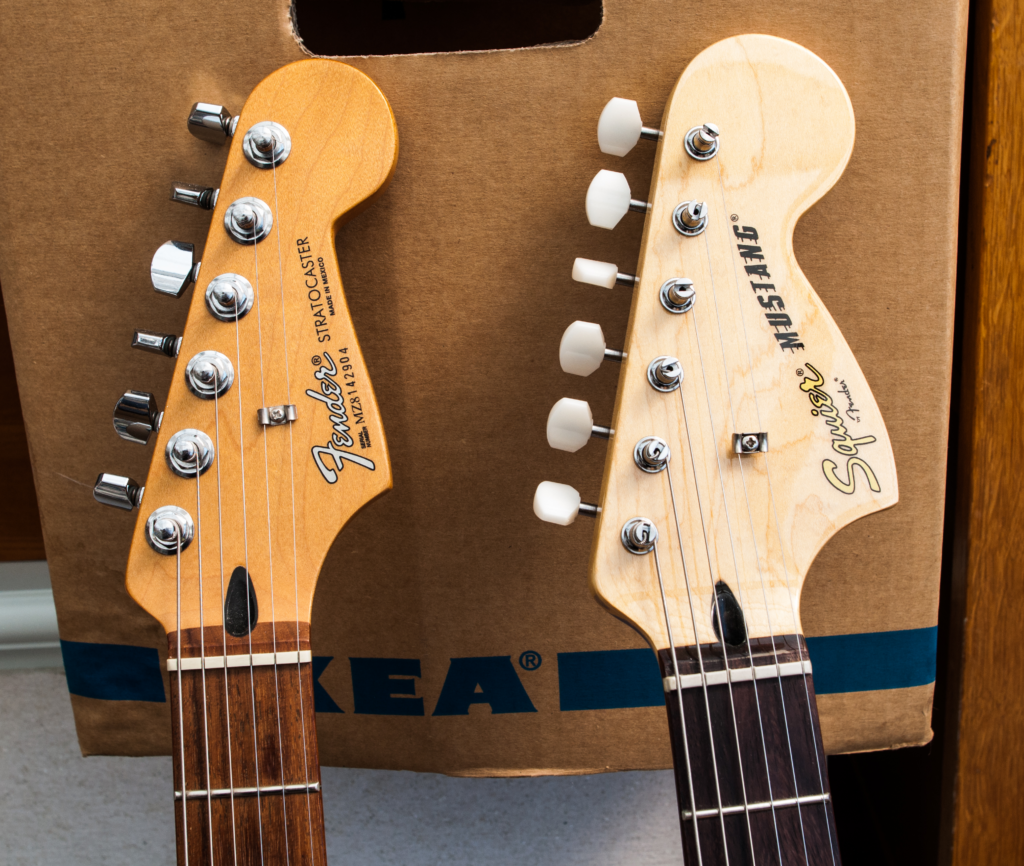
Photo: Getty Images
Yet that “budget” label, tied to overseas factories, makes many guitarists shrink with shame. They dread stepping on stage with a Squier, haunted by the thought that others will judge the headstock before a single note rings out. That’s pure ego talking, and in music, ego is the enemy of greatness.
Fender is brilliant because they understand the musician’s journey from a psychological perspective. They don’t ask a beginner for a massive financial commitment or a blood oath of loyalty right away. They only ask one simple question: “Can your fingers make a sound?”
The magic of the Squier is that it looks like a dream come true. It carries the same legendary silhouette, the same curves, the same stories. When you pick up a Squier Stratocaster, you’re not settling for a copy; you’re stepping into a living tradition. Fender knows that your first emotional connection matters more than any price tag.
That bond is what keeps you practicing at 2:00 AM, fingers aching, progress crawling. That investment of time is what eventually carries you up the ladder, from Player Series to American Professional, and maybe one day, Custom Shop. They’re not just selling wood and strings; they’re offering you a path to becoming a true musician.
Now, look at Gibson and Epiphone.
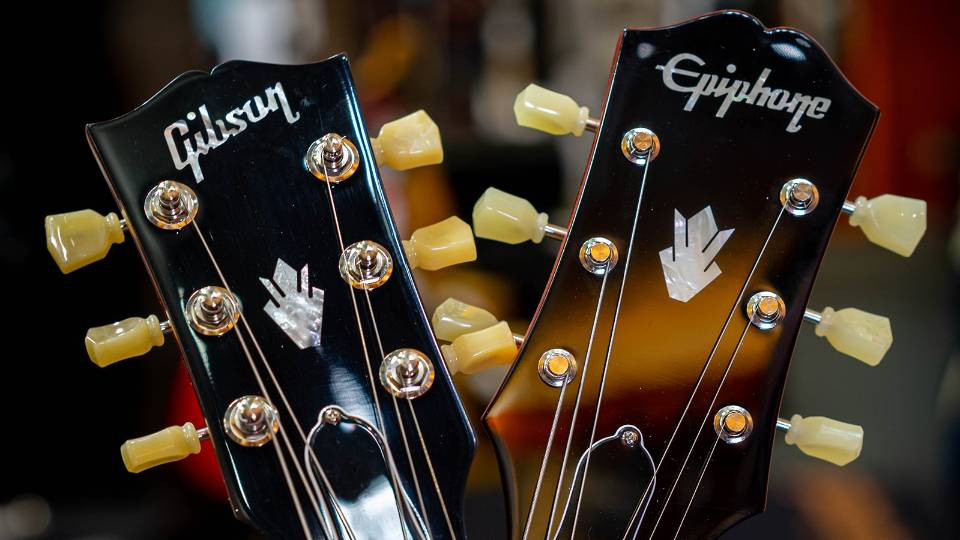
Photo: Getty Images
The dynamic here is slightly different but equally powerful. For decades, the Gibson Custom Shop has represented the absolute peak of rock and roll mythology: the Les Paul, the ES-335, the SG. These are the “Holy Grail“ instruments.
In the past, Epiphone was viewed as a necessary compromise, the guitar you bought until you could afford the “real thing.” But that has changed drastically in the last decade.
Today’s Epiphones are stage-ready and studio-worthy, with pro electronics, gorgeous finishes, and smooth playability. Choosing the accessible model means you keep thousands in your pocket. In the indie world, that’s what I call smart, creative investing.
Think about what $2,500 (the price difference between a high-end Gibson and a solid Epiphone) can do for an indie career:
It covers a whole week of studio time with a professional engineer.
It pays to invest in a high-quality music video that can generate thousands of views.
It funds a targeted social media ad campaign to build a real-world fan base.
It buys a reliable set of tour monitors and a decent PA system.
This shift from the big brands sends a clear message: the real barrier isn’t your gear, it’s your mindset.
Let me share a real-world lesson in why soul always trumps gear. During my time in Canada, I played with one of the most inspiring guitarists I’ve ever met: Brent Watson. We jammed together and eventually laid down a few tracks.
From day one, Brent arrived with his white Squier Stratocaster. To a gear-snob, it was just a cheap guitar. But he showed me all: soul matters more than price tags. He recorded with that very instrument, and the results were breathtaking: a crystal-clear tone, a delicate touch, and music that spoke for itself.
Seeing a world-class professional squeeze pure, high-end tone out of a $150 guitar is the ultimate reality check.
You can actually see and hear this below.
Credit: Or Mishal & Friends
It’s proof that hands and heart shape the sound, not the price tag. If you can’t make a $150 guitar sing, a $5,000 one won’t rescue you; it’ll just make your mistakes louder and pricier.
Picking a budget instrument isn’t selling yourself short; it’s a smart move. It shows you’re severe enough to put in your ten thousand hours without sinking into debt before your first single drops. Some of the most outstanding records ever made were born from so-called “cheap” gear.
If you’re still worried that playing a “subsidiary” brand makes you look like an amateur, let’s look at the Hall of Fame. These are artists who could afford anything, yet they chose the accessible path:
The Beatles: During their most groundbreaking years, John Lennon and George Harrison used the Epiphone Casino almost exclusively. That iconic, jangly, slightly overdriven sound of the mid-60s? That’s Epiphone. Even Paul McCartney’s favorite studio guitar was an Epiphone Texan acoustic.
Jeff Healey: The Canadian legend and blind virtuoso. He played a 1980s Squier Stratocaster for much of his career. He didn’t care about the logo; he cared about the feel.
Noel Gallagher: The architect of the Britpop sound. His Epiphone Riviera is as much a part of the Oasis mythology as his songwriting.
Kurt Cobain: Who thrived on “cheap” gear. From Univox to Epiphone, he proved that the raw energy of a song is more powerful than the price of the guitar.
Gary Clark Jr.: One of the modern kings of blues-rock. He is almost always seen with an Epiphone Casino.
These artists didn’t wait for a luxury endorsement to change music. They grabbed what was within reach, mastered it, and turned it into legend.
The artist who can make a $150 guitar sound like a million bucks is the one who will survive. This ability to maximize limited resources is the core skill of the indie musician. It’s about being a “lean startup” in the form of a band.
Photo: Peter Green
When you realize your career needs an easy on-ramp as much as it needs high-end depth, you stop stressing about selling out and start focusing on building trust. Accessibility breeds trust. Trust leads to longevity. Longevity gives you space for depth.
In the end, professionalism lives inside you, not in your gear. A true pro shows up, does the work, and delivers, no matter what.
I’ve seen musicians play the most incredible sets on borrowed gear, and I’ve seen people with “perfect” rigs fail to connect with an audience. Your skill is your only proper security in this industry.
Gear can be stolen, broken, or sold. Your ability to play, to write, and to connect with people is yours forever.
One of the most prominent mistakes musicians make is waiting, waiting for the “right” guitar, the “right” studio, or the “right” budget. But in music, time is your most precious currency.
If you wait two years to save up for a Gibson, that’s two years of music you didn’t release. That’s two years of fans you didn’t meet. That’s two years of skill you didn’t develop.
Compare that to the musician who buys a Squier today. Within a week, they are practicing. Within a month, they are writing. Within six months, they will have a demo. The “Price Starting” (a few hundred dollars) is negligible compared to the “Cost of Waiting” (years of lost opportunity).
This brings me to the “why” behind this article.
Over the last few months, I’ve been reflecting on how this tiered approach, from Squier to Custom Shop, is actually the perfect model for your entire creative ecosystem.
Just like Fender, you need to provide different levels of accessibility for your audience:
1. The “Squier” Level (Accessibility): This is your most generous work. Your free videos and your social media presence. This is where people fall in love with your sound without fear or financial barrier. It’s the “on-ramp” to your world.
2. The “Player Series” Level (Commitment): This is your recorded music, your ticketed shows, and your merchandise. This is for the fans who have moved past the “beginner” stage of their relationship with you and want to invest in your growth.
3. The “Custom Shop” Level (Intimacy): These are the moments that don’t scale. Small, intimate house concerts. One-on-one mentorship.
This philosophy isn’t just for the guitar players. It holds for keyboard players, producers, and electronic artists as well.
Keyboard players face the same ego trap. Maybe you dream of a $4,000 Roland or Nord, but in today’s world, even a $200 Yamaha or Casio can be a powerhouse, perfect for beginners and pros alike.
Today’s budget keyboards are loaded with pro sounds, built-in recording, and learning tools that would have been unthinkable a decade ago. They give you everything you need to launch your sound.
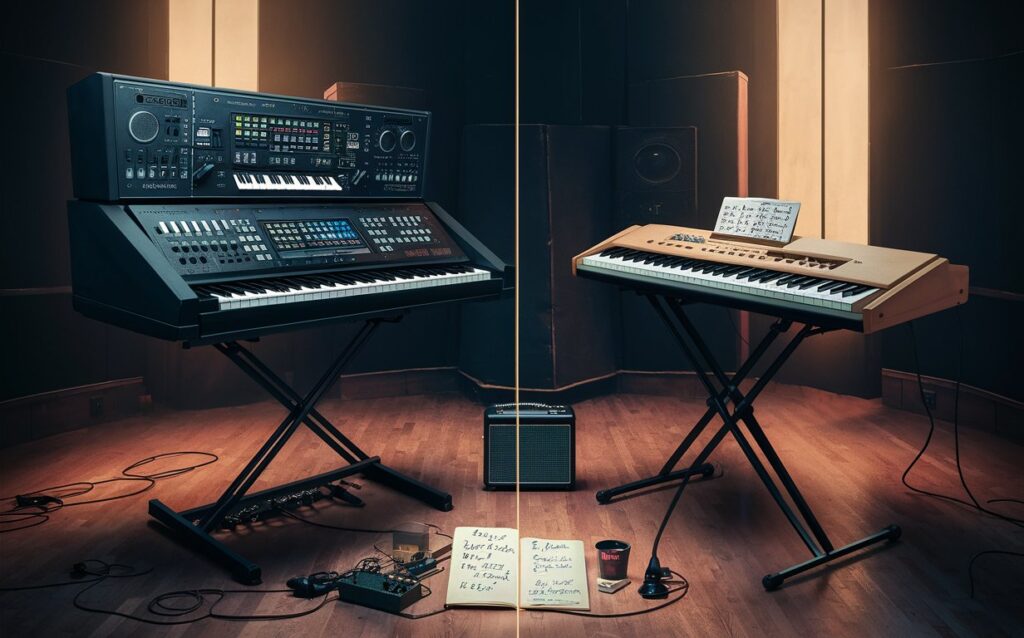
Photo: Peter Green
No one in the crowd or on Spotify cares if your piano came from a $5,000 rig or a $200 Yamaha; if the melody moves them, you’ve done your job. Don’t let gear envy stall your progress.
So, if you’re sitting there wondering if you’re “ready” because you don’t have the expensive brand name on your guitar or keyboard, stop. You are ready the moment you decide to be. The industry doesn’t hand out prizes for the most expensive gear; it rewards the best songs and the most authentic performances.
In music, resourcefulness beats resources every time. I say this often. This is where your work ethic shines and where you hunt for value.
In addition, beyond new gear, there’s a whole world for the savvy musician: the thriving secondary market, the used market, the goldmine for what I call “pro-level budget instruments, hidden gems waiting for their second act.
Reverb: The musician’s marketplace. It’s where you find the perfectly functioning, slightly dinged-up amp or guitar that someone else “outgrew.”
eBay: It requires a careful eye for detail, but it’s a goldmine for overlooked vintage pieces and Japanese-made gems.Craigslist & Facebook
Marketplace: These are the “trenches.” Local deals mean no shipping costs and the ability to inspect the instrument in person. This is where the true hidden gems live.
Don’t wait for perfect gear or a flawless idea to start building your career. Grab a budget guitar, pick up a simple keyboard, hunt down a used workhorse amp, make noise, make mistakes, and start shaping your career today, because in the end, the most significant barrier to an artist isn’t money, it’s inertia.
Break the cycle. Step out of your comfort zone. Stop obsessing over headstock logos and start listening to the soul in your songs.
Just do the work.